


Key Takeaways
- Ratnagiri Alphonso mangoes are closely associated with Maharashtra’s Konkan coast.
- Ratnagiri’s red laterite soil, hilly terrain and proximity to the Arabian Sea create a distinctive growing environment.
- Alphonso has a Geographical Indication registration in Maharashtra.
Why Does Ratnagiri Matter for Alphonso Mangoes?
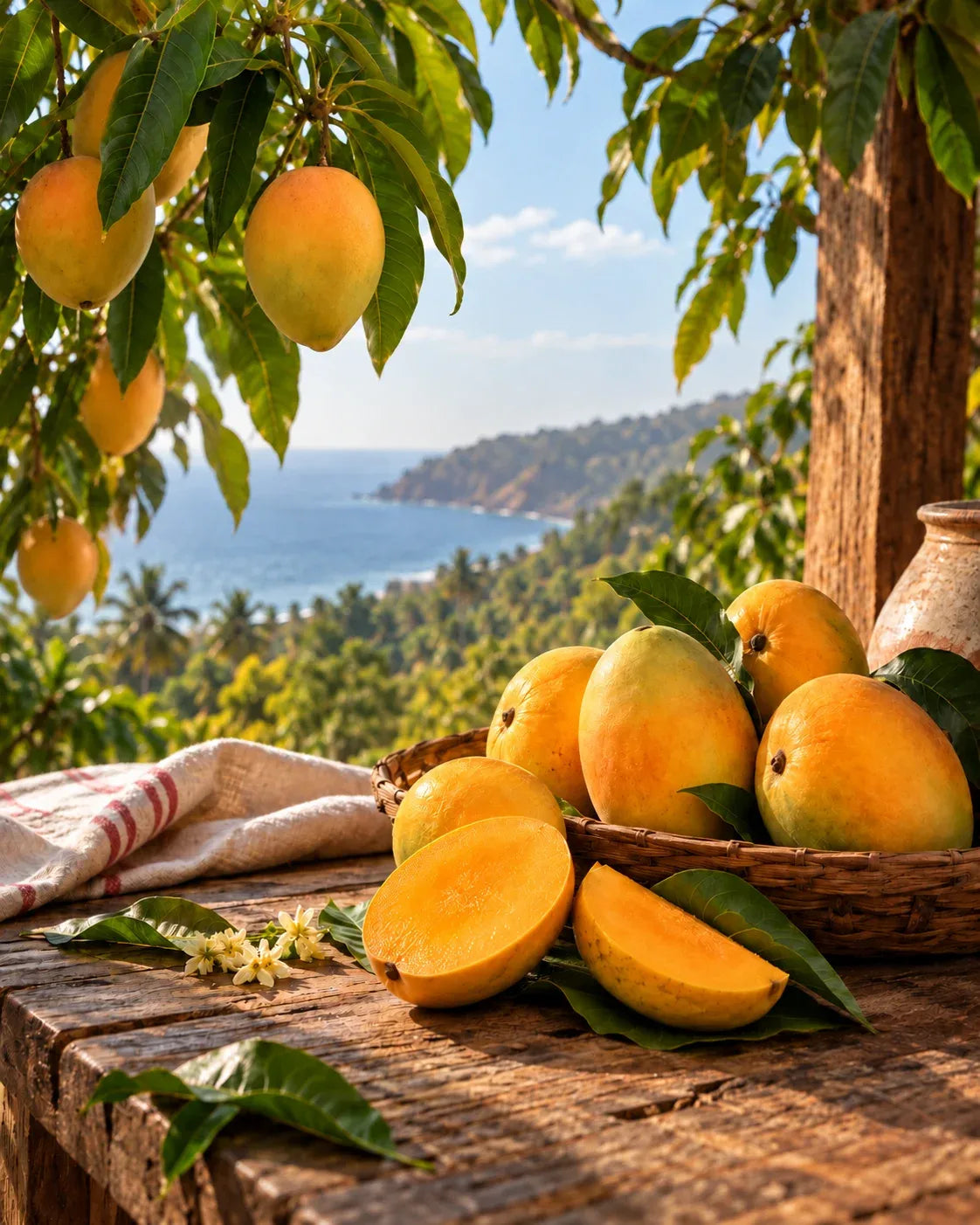
Ratnagiri Alphonso, locally known as Hapus, is the Alphonso mango grown in the Ratnagiri district of Maharashtra’s Konkan coast. The name tells you two things: Alphonso is the mango variety, while Ratnagiri is the place where it is grown. Ratnagiri is a narrow, hilly coastal belt with heavy monsoon rainfall, laterite-rich land and the Arabian Sea close by. Together, these conditions create a growing environment that is very different from the drier interior of Maharashtra and has long supported Alphonso cultivation in the region. That is why Ratnagiri matters when we talk specifically about Alphonso mangoes.

What Is Special About Ratnagiri’s Laterite Soil?
Laterite is the red, often rocky soil seen across much of Ratnagiri. It forms in warm, high-rainfall regions through a long process of weathering and leaching. In simple terms, repeated rainfall moves through the ground and gradually washes away more soluble minerals, while iron-rich material remains behind and gives the soil its characteristic red colour. Ratnagiri’s heavy monsoon rainfall and basaltic geology favour this process, making laterite a defining feature of the Konkan landscape. This is a naturally formed soil profile, not something added to orchards. In drier inland parts of Maharashtra, the same combination of prolonged rainfall and weathering is not as dominant, so different soil types are more common.

What Role Does the Arabian Sea Play?
The Arabian Sea shapes Ratnagiri’s climate more than it directly affects the fruit. Coastal air carries more moisture, so Ratnagiri generally experiences higher humidity than many inland areas, while the coast is also strongly influenced by the monsoon. Humidity forms part of the warm tropical environment in which mango trees grow, but timing matters. Alphonso flowering also benefits from a comparatively drier spell, while too much rain or persistent dampness during flowering can disturb fruit set. So it is not simply ‘sea air’ making the difference. What matters is the seasonal coastal pattern of warmth, humidity and monsoon rain followed by the drier conditions needed around flowering.
Does Ratnagiri Alphonso Have a GI Tag?
Yes. Alphonso has a Geographical Indication (GI) registration in Maharashtra, and Ratnagiri is one of the regions closely identified with Hapus cultivation. A GI links a product’s name and reputation to a particular geographical origin, recognising that place is part of its identity. It does not mean that every mango from the region will be identical or automatically better. Instead, it formally recognises the geographical connection behind the name. For Ratnagiri Alphonso, that connection brings the focus back to the region, its landscape and its coastal growing conditions.

Ratnagiri Alphonso mangoes are special because they grow in a distinctive combination of red laterite soil, hilly Konkan terrain and a coastal climate shaped by the Arabian Sea. These natural conditions, together with Ratnagiri’s recognised geographical identity for Alphonso cultivation, are what make the region so closely associated with Hapus.





Comments (0)
Your comment may be featured to help others on a similar journey