


Key Takeaways
- True, velvety Mango Kulfi relies on slow-simmered, caramelised milk solids (Rabri) combined with thick, unadulterated fruit pulp to prevent icy patches.
- Sourcing pure, unsweetened Ratnagiri Alphonso pulp eliminates the need for cheap texturizers like cornstarch or commercial thickeners.
- The natural acidity of genuine Hapus perfectly balances the heavy, reduced proteins of the milk, creating a silky, luxurious mouthfeel.
When was the last time you bit into a mango kulfi and found yourself chewing on crunchy, flavourless ice crystals instead of smooth, creamy goodness?
Exactly.
It is one of the most disappointing summer betrayals. More often than not, commercial kulfis rely on watery milk, heavy doses of cornstarch and artificial mango flavourings to mimic the real deal. But if you want to experience a truly sublime, artisanal frozen dessert right in your kitchen, you need to revisit a time-tested pairing: traditional Slow-Simmered Rabri and Aazol’s Ratnagiri Alphonso Aam Ras.
Your Dessert Masterclass
Let’s talk about a dessert technique that’s been anchoring Indian summers long before modern ice cream makers or commercial stabilizers existed: Kulfi.
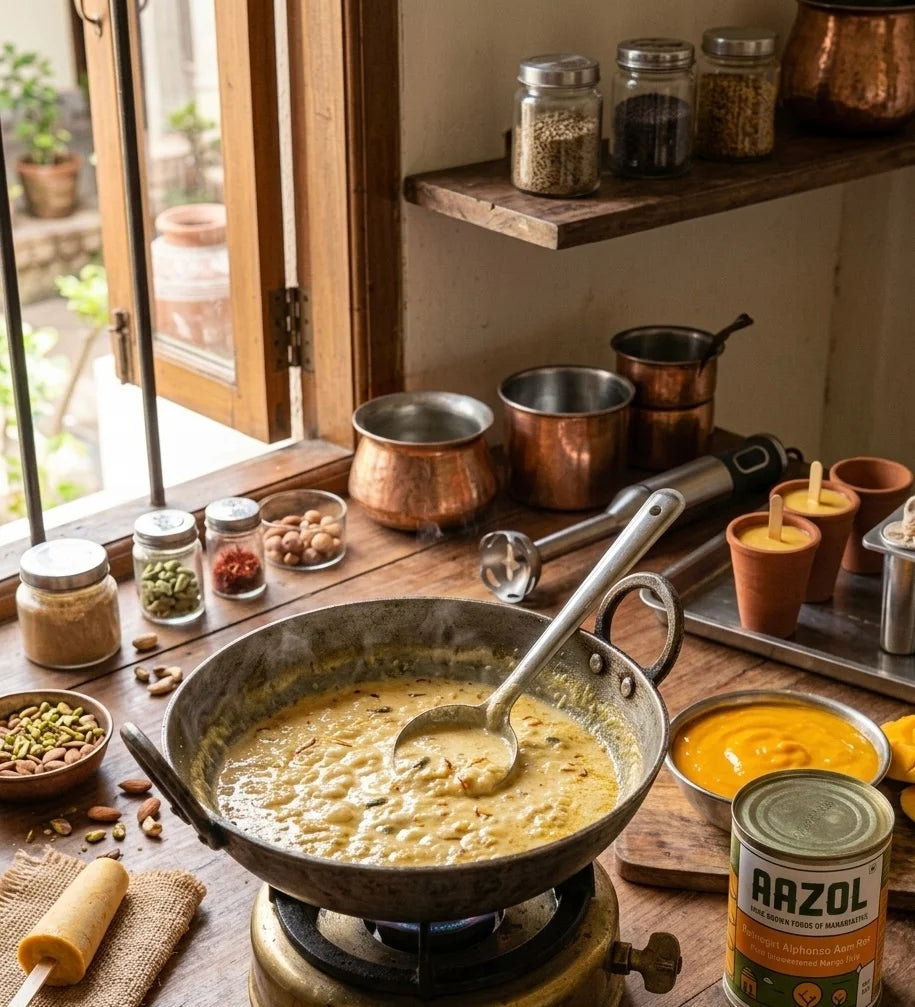
Unlike Western ice creams, which are whipped to incorporate air, authentic Indian Kulfi is completely unwhipped. It gets its iconic, dense texture from the painstaking process of boiling full-fat milk over a slow flame, letting it reduce by half until the sugars naturally caramelise and the milk proteins concentrate into a rich, nutty Rabri.
Historically, halwais (traditional sweet makers) didn't throw shortcuts into the kadhai. When mango season arrived, they married this deeply caramelised Rabri with hand-scraped, thick Alphonso pulp. While mass-produced brands shifted to cheap mango purees packed with water and chemical preservatives, true culinary purists quietly stayed loyal to the real deal—thick, velvety, pure Aam Ras. It’s exactly why their Kulfis melt like silk on the tongue rather than cracking like flavoured ice.

The Special Chemistry That Holds It All
It’s not just about matching iconic flavours—it’s about balancing food science in your freezer. The biggest enemy of a homemade Kulfi is water.
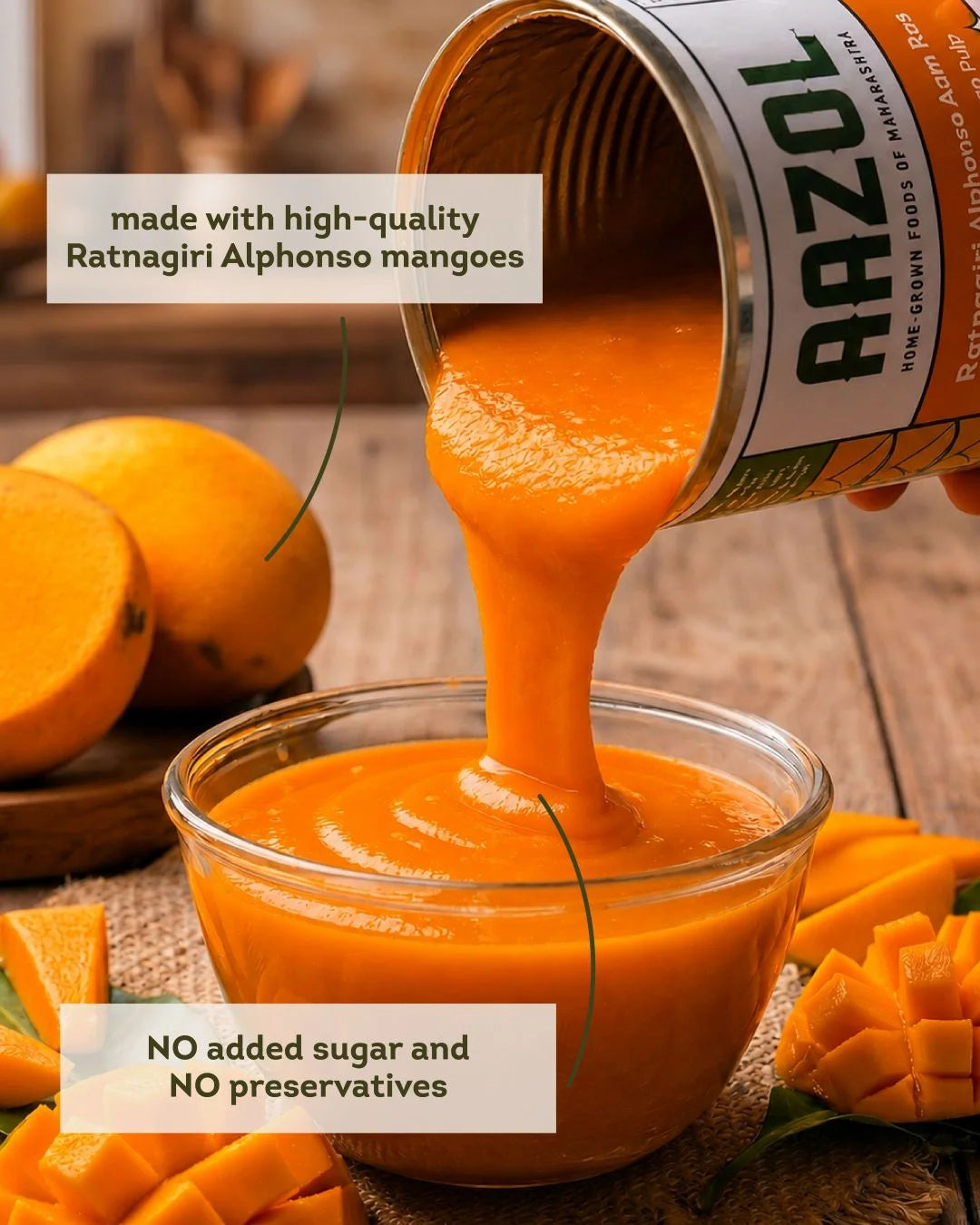
If you use a thin, water-diluted mango syrup or a pulp made from inferior, fibrous mango varieties, that excess water separates during the freezing process, turning into microscopic ice crystals. Aazol’s Aam Ras is crafted exclusively from handpicked, naturally ripened Ratnagiri Alphonso mangoes without a single drop of added water or sugar. Because it is naturally dense and low in moisture, it blends into the reduced milk solids effortlessly, creating a perfectly homogenous mixture that freezes into solid, creamy perfection.
Ingredients of a Masterpiece
To build this artisanal Kulfi, your foundation needs to be flawless. You only need two hero components: full-cream buffalo or cow milk reduced slowly in an iron kadhai and a generous pour of Aazol’s pure Alphonso pulp.
Because our Aam Ras is stone-ground and flash-frozen at the absolute peak of ripeness, it retains the characteristic complex aroma and deep saffron hue of authentic Konkan orchards—giving your Kulfi its signature rich look without a single drop of artificial yellow food dye.

Usage: How to Create the Perfect Blend
Crafting this authentic Mango Kulfi at home requires patience, not fancy gadgets. Follow these simple steps:
- Pour full-fat milk into a wide kadhai and simmer on low heat, stirring continuously to prevent burning.
- Once the milk reduces to one-third of its original volume and turns a pale cream colour, turn off the heat and let the Rabri cool completely.
- Gently fold in a generous portion of chilled Aazol Aam Ras into the cooled Rabri until completely smooth.
- Pour the mixture into traditional aluminum or clay Kulfi molds, seal tightly to prevent air entry and freeze for at least 6–8 hours.
When you slide it out of the mold, it behaves exactly like an artisanal street confection—delivering an intense burst of tropical fruitiness wrapped in a deeply comforting, milky richness.
Is Real Fruit Pulp Better Than Kulfi Mixes?
Yes, pure fruit pulp is exponentially better for both your palate and your peace of mind. Commercial kulfi mixes and artificial syrups are essentially chemical cocktails of milk solids, high-fructose corn syrup and synthetic stabilisers. When you switch to Aazol's Aam Ras, you are consuming 100% real fruit. You get the natural dietary fibre, clean fruit sugars and genuine aroma of the Hapus mango, leaving absolutely no synthetic, chemical aftertaste.
Honest Sourcing, Unmatched Value
Pure, unsweetened Ratnagiri Alphonso pulp comes with a premium. The reason is simple—it requires low structural yield, labor-intensive hand-pulping and absolutely no artificial fillers, water or chemical preservatives to stretch the volume. You're paying for pure fruit integrity, regional authenticity and fair compensation for local Konkan farmers who have perfected this harvest for generations. It is a difference in quality that your family will taste immediately at the very first bite.
An authentic Mango Kulfi isn't a modern fast-food gimmick. It’s a glorious, slow-cooked tribute to Indian summers—and using the right pulp makes all the difference.


Comments (0)
Your comment may be featured to help others on a similar journey