

Key Takeaways
- Ratnagiri Alphonso is a premium mango, so the raw material itself costs more.
- Season, harvest conditions and fruit quality can change mango availability and sourcing costs.
- Pulp yield, 100% mango content and processing requirements also influence the final cost.
Why Does Starting With Ratnagiri Alphonso Cost More?
Ratnagiri Alphonso is widely regarded as one of India’s finest mangoes and commands a premium compared with unspecified or lower-cost mango varieties. We choose Ratnagiri Hapus because of that quality and reputation. When Aam Ras starts with a premium mango as its main ingredient, the raw-material cost is already higher at the orchard and that difference carries into the finished product.

What Changes From One Mango Season to Another?
Alphonso mangoes are seasonal, so every harvest is a little different. Weather, flowering conditions, crop size and the amount of good fruit available can all change from one season to the next. A smaller or more difficult harvest can make suitable mangoes harder to source, while a stronger season may improve availability. Fruit quality also matters because the pulp can only be as good as the mangoes selected for it. Ripe, sound Alphonso mangoes that are suitable for pulping generally cost more than lower-grade fruit, so changes in the season can affect the raw-material cost before processing even begins.

How Much of a Whole Mango Actually Becomes Pulp?
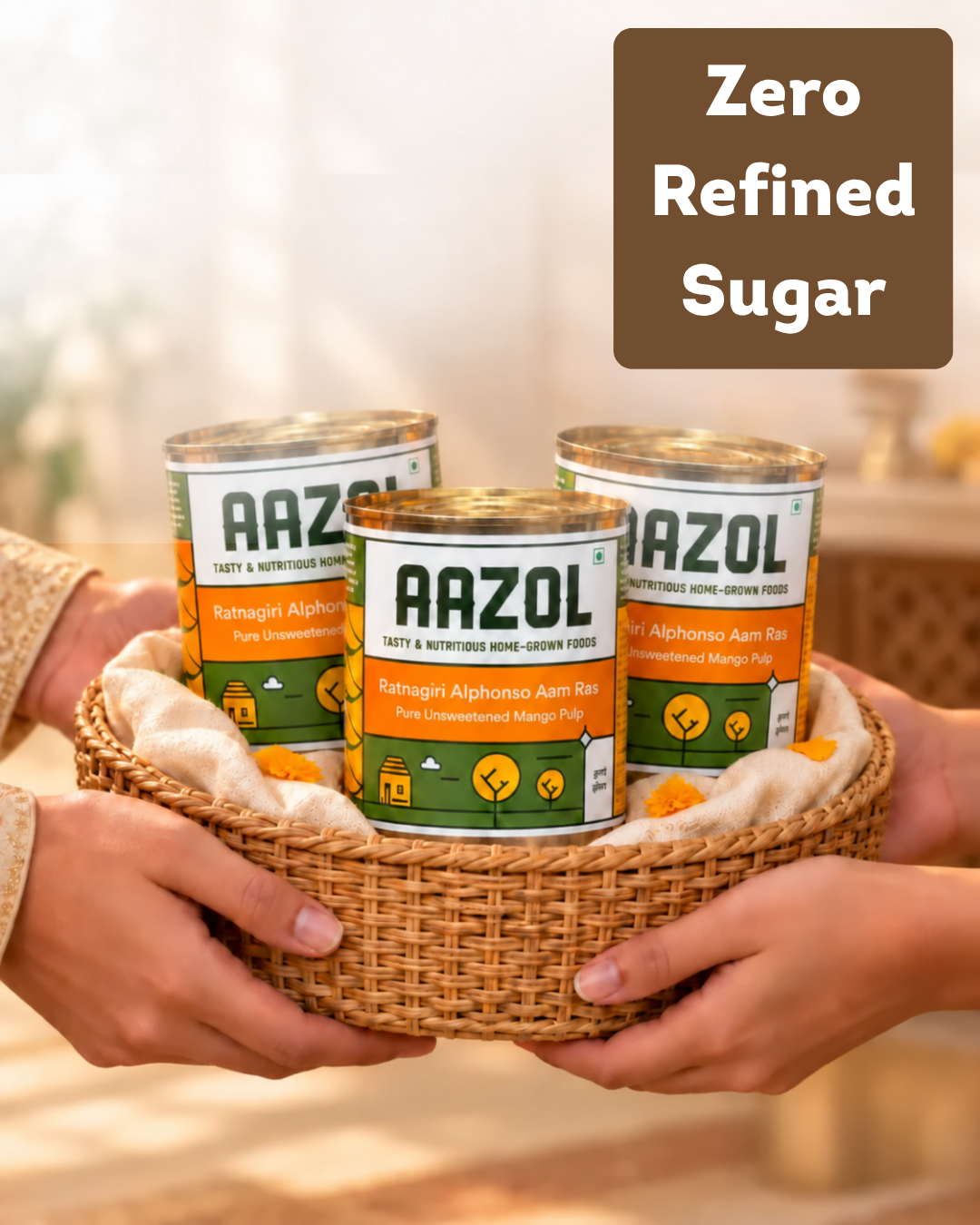
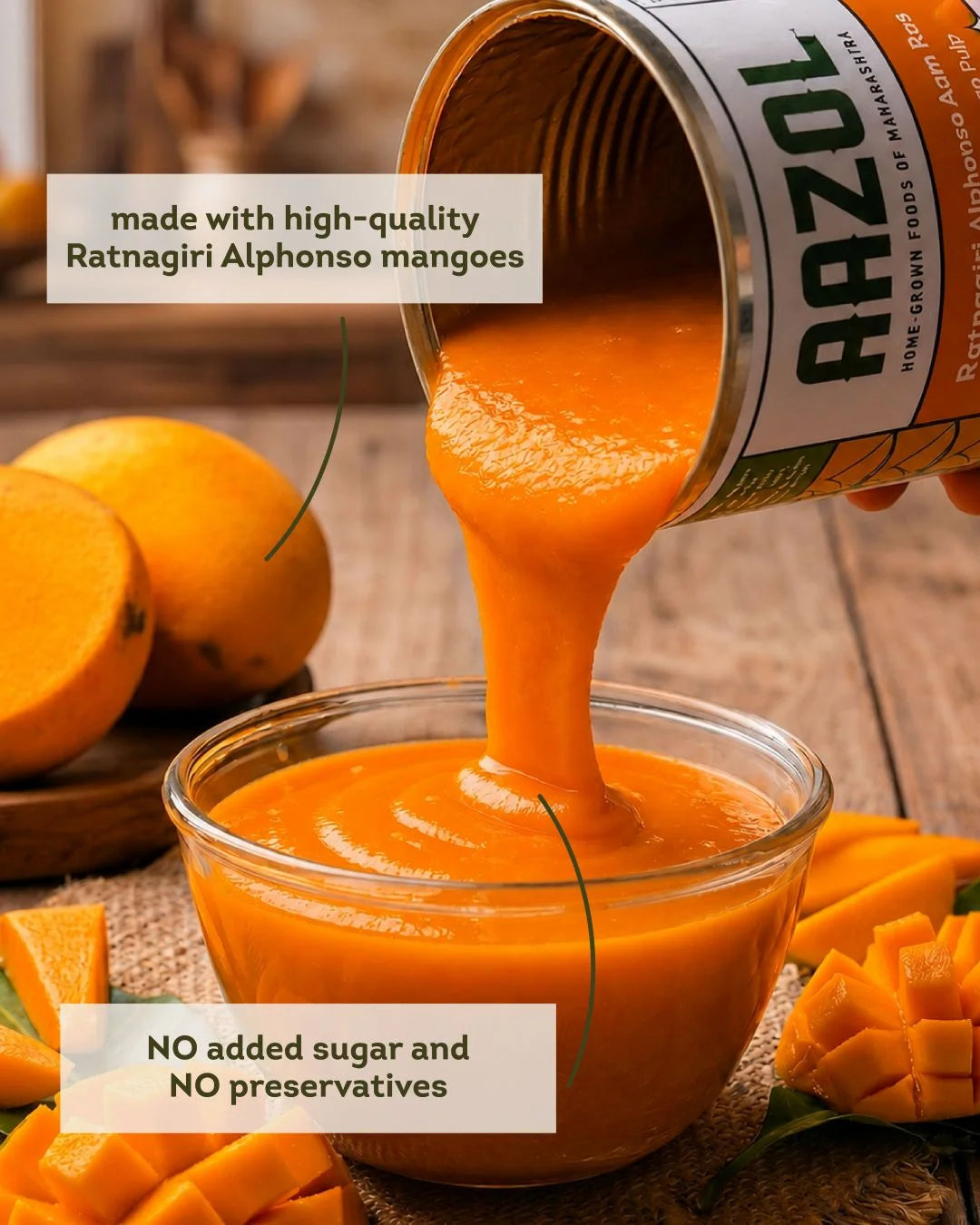
Not all of a mango becomes Aam Ras. The peel and large central stone are removed, so only the edible flesh becomes usable pulp. It takes around four Alphonso mangoes, weighing approximately 2kg in total, to make one tin of Aam Ras. Aazol’s Ratnagiri Alphonso Aam Ras is made with 100% mango pulp, with no added sugar or preservatives. This means the amount of whole fruit required and the usable pulp obtained from it directly influence the final cost.

What Happens After the Mangoes Are Sourced?
Once the mangoes are sourced, the work is not finished. The fruit still has to be pulped, handled, packed and checked under proper food-safety controls before it can become a packaged Aam Ras. Aazol states that its Ratnagiri Alphonso mangoes are processed in US FDA-compliant units. That requires processing equipment, hygiene systems, quality checks and suitable packaging. These steps do not replace the importance of the mango itself, but they add another layer of cost after sourcing. It is the difference between buying seasonal fruit and turning that fruit into a consistent packaged product that can reach the customer.
Authentic Ratnagiri Alphonso Aam Ras costs more mainly because it starts with premium Ratnagiri Alphonso mangoes. Seasonal availability, fruit quality, usable pulp yield and the processing required to turn the mangoes into a packaged product all add to the final cost.


Comments (0)
Your comment may be featured to help others on a similar journey