


Key Takeaways
- Ratnagiri Alphonso mangoes grow in a unique coastal climate that gives them their signature sweetness, aroma and saffron-coloured pulp.
- Authentic Ratnagiri Alphonso mangoes are harvested only for a few weeks each year, making genuine Aam Ras a seasonal delicacy rather than a year-round commodity.
- Only the best mangoes make it into premium Ratnagiri Alphonso Aam Ras, ensuring consistent taste, colour and texture.
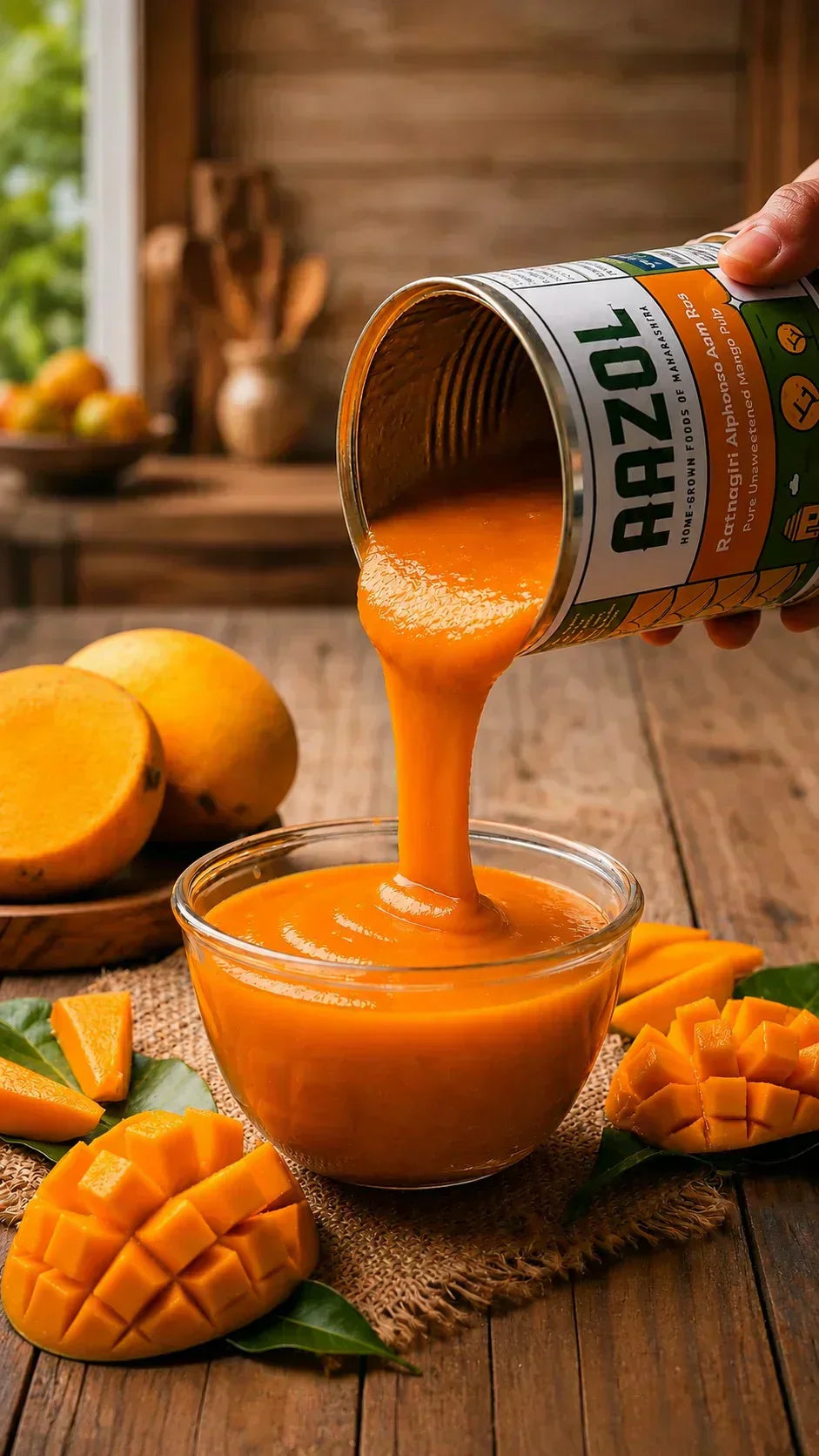
It is easy to look at a supermarket shelf packed with cheap, mass-produced mango pulps and wonder why artisanal Hapus pulp costs significantly more. Before you write it off as just another overpriced luxury, let us pull back the curtain on what actually goes into making a jar of true Ratnagiri Alphonso Aam Ras. Once you understand the journey from the coastal orchards of the Konkan to your dining table, you'll wonder how it doesn't cost even more.
Your Coastal King
The Ratnagiri Alphonso Mangoes have held a global reputation for centuries.
While mangoes grow in abundance all across India, the Alphonso is grown specifically in the Ratnagiri district of Maharashtra and is legally protected by a Geographical Indication (GI) tag. This isn’t just a fancy marketing label, it’s a recognition of a unique ecosystem. The volcanic, iron-rich laterite soil of the Konkan coast, combined with the intense humidity and salty marine winds, creates a natural pressure cooker that forces the fruit to develop an unmatched, intoxicatingly sweet aroma and a velvety, fibre-free flesh.
Historically, kings, emperors and global traders crossed oceans just to get a taste of this specific harvest. While mass commercial brands shifted to high-yield, chemically boosted hybrid mango varieties that grow quickly anywhere, true Alphonso orchards stayed tied to native soil, unmodified, Vulnerable to weather.
The Trial of Patience and Human Hands
It’s not just about where it grows, it’s about the staggering amount of human labour required before a single drop of pulp is made.
Unlike regular commercial fruits that are violently shaken off trees by tractors or chemically gassed with calcium carbide to turn yellow overnight, authentic Ratnagiri mangoes defy automation. Farmers must inspect each tree daily, hand-picking individual fruits using a traditional net called a झेला (Zhela) to ensure the delicate skin never touches the ground.
Once harvested, the green mangoes are carefully laid out on beds of natural rice straw in dark, ventilated rooms. They are checked by hand, one by one, day after day, to catch the exact micro-moment of natural ripening. If a commercial factory takes shortcuts, the mango loses its characteristic complex flavour. True artisans take zero shortcuts, trading industrial speed for absolute flavour perfection.

Ingredients of a True Luxury
When you look at the back of a cheap, commercial can of mango puree, the first few ingredients are almost always "Water," "Sugar Syrup," and "Citric Acid," followed by a small percentage of generic mango solids and artificial yellow colouring. They use these additives to artificially stretch the volume and hide the taste of inferior, unripe fruit.
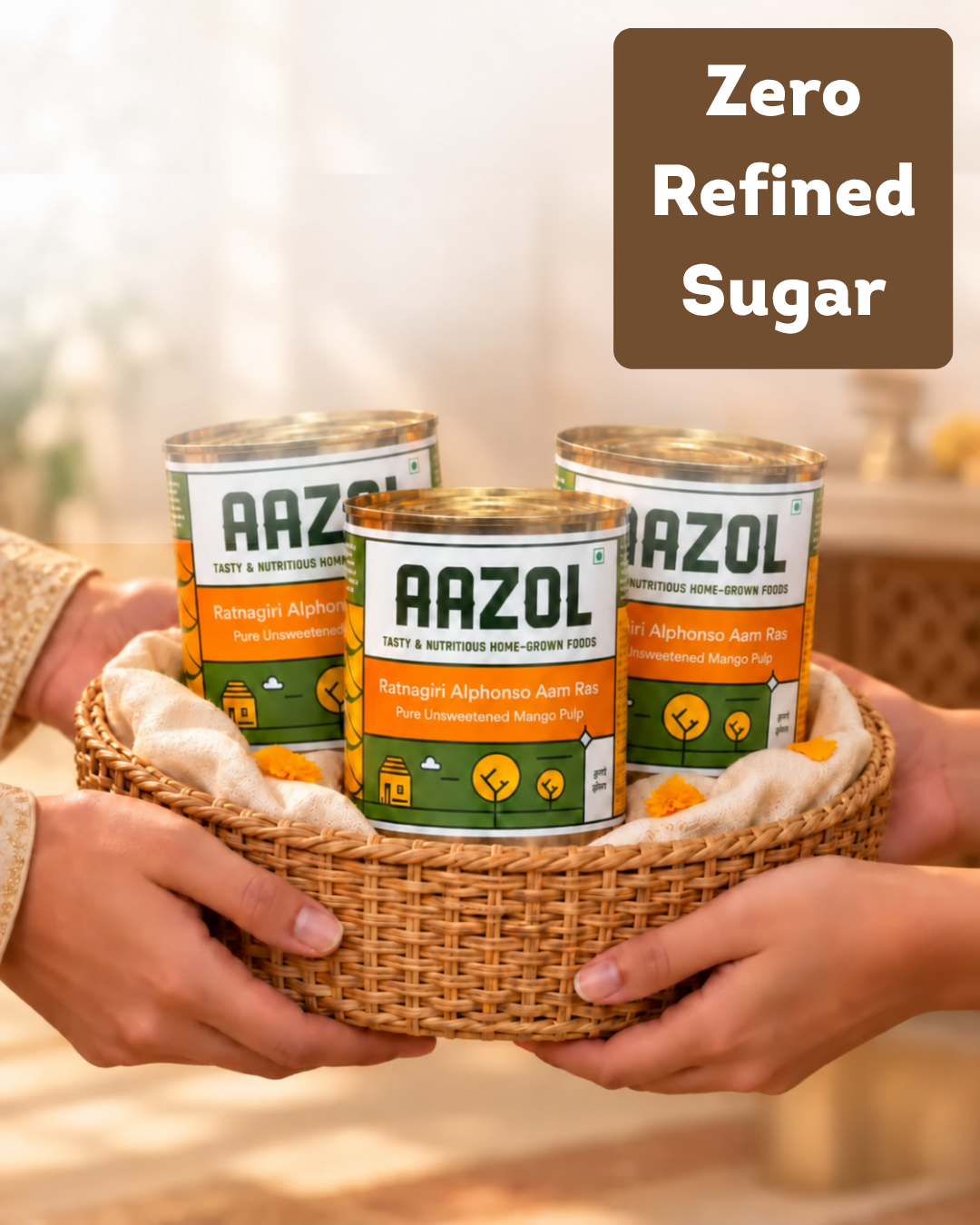
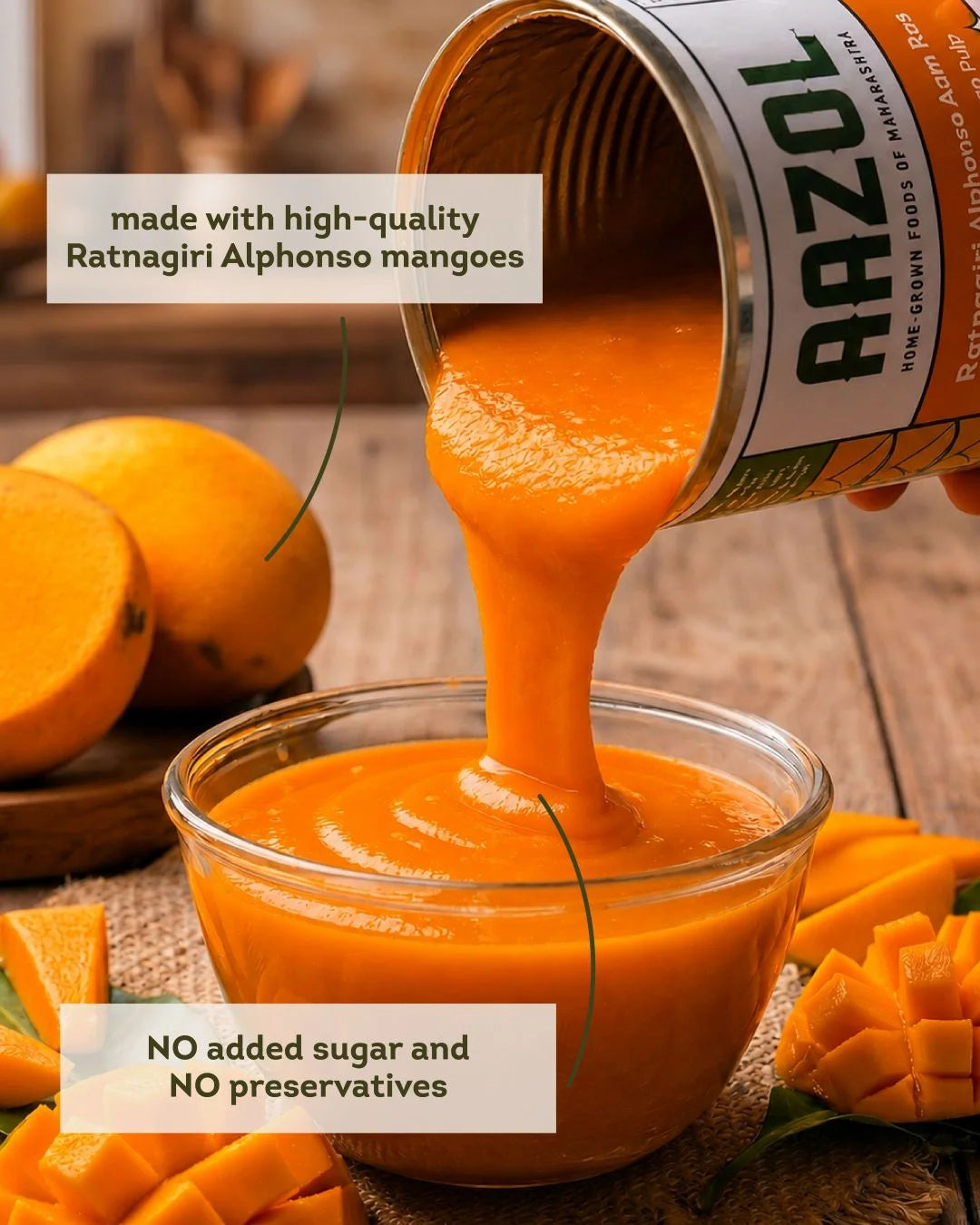
Aazol’s Aam Ras contains exactly one ingredient: 100% pure Ratnagiri Alphonso mango pulp.
Because we do not use a single drop of added water to dilute the mixture or sugar to mask bitterness, it takes a massive volume of premium, tree-ripened Hapus mangoes just to yield a single jar. Preserving the native vitamins, dietary fibres and that unmistakable deep orange saffron hue naturally.

Usage: A Little Goes an Incredibly Long Way
Because Aazol's Aam Ras is completely concentrated and undiluted, its culinary behaviour is entirely different from supermarket purees. You don't need to pour half a bottle to get a real mango flavour.
A single spoonful delivered over a warm chapati, swirled into a slow-simmered rabri for kulfi or layered into a street-style Falooda provides an intense, explosive burst of tropical fruitiness. It coats your palate perfectly, meaning a single jar stretches much further across your family's summer meals than thin, syrup-laden alternatives.
Is It Generational Value or Just a Trend?
Yes, investing in real Alphonso pulp is genuinely worth it for both your health and your heritage. When you choose cheap, processed mango syrups, you are consuming empty calories, synthetic food dyes and high-fructose corn syrup that trigger rapid blood sugar spikes and leave a chemical aftertaste. Choosing Aazol's Aam Ras means you are supporting an ancestral agricultural cycle, protecting regional Konkan farming communities and serving your family genuine, clean food—the exact way nature intended.

Sourcing Truth, Unmatched Value
Pure, unsweetened Ratnagiri Alphonso pulp comes with a premium because it refuses to compromise. It represents low structural processing yields, zero chemical shortcuts and fair, ethical compensation for local farmers who risk entire seasons against volatile coastal weather. You aren't just buying food; you are preserving a culinary legacy. It is a difference in purity, thickness and soul that your family will taste immediately in the very first bite.
True Ratnagiri Aam Ras isn't a modern fast-food commodity. It’s a seasonal blessing—and experiencing the real thing is worth every single rupee.


Comments (0)
Your comment may be featured to help others on a similar journey